Wednesday, 29 March 2017

Actor's Profile - Protagonist


Actors Profile


Name: Chloe Corner


Age: 18

Height: 5'7''

Weight: 75 Kg

Playing Age: 18-24 Years

Eye Colour: Green/Blue

Hair Colour: Brown

Hair Length: Long


Filmography:

  • An Hour After Midnight
  • Sweet Dreams
  • Blood Roses
  • Once Upon A City
  • Line Of Action
  • Piccadilly Love
Skills:
Accents & Dialects: American-Californian, American-Southern States, Belfast, Devon, Cornwall,
 Indian, Australian

Musical Instruments: Piano, Bass & Violin

Bibliography:

Chloe Corner is an British  actor, singer, multi-instrumentalist. Corner has won international recognition for his roles in major films, notably as, period, horror sand romance characters. She is best known for his long-running role as Lucy in Sweet Dreams, as well as the action-horror film, Line Of Duty (2004) and the drama Once Upon A City (2010). Her work in Blood Roses earned him her first Academy Award nomination for Best Actress and her first Golden Globe Award for Best Actress - Motion Picture Musical or Comedy in 2013. In Broadway theatre, Corner won a Tony Award for his role in Once Upon A City. A four-time host of the Tony Awards themselves, he won an Emmy Award for one of these appearances. Corner also hosted the 81st Academy Awards on 22 February 2009.

Corner was born in England, South Wales, to Grace Corner and Christopher John Corner, an accountant. She is the youngest of five children. Her parents, both English, moved to Whales shortly before her birth. She also has Greek (from a great-grandfather) and Scottish (from a grandmother) ancestry.

Corner has a Drama GCSE with a journalism A Level from Shirley High. After graduating, she got her first job at a local restaurant  where she got scouted for her first role in Sweet Dreams, immediately after which she was offered a starring role in the AFV-TV romantic drama Piccadilly Love(2007). In her spare time, Corner plays piano, golf, and guitar, and likes to windsurf.


Actor's Profile - Antagonist

Actors Profile


Name: Ellie D’Sylva

Age: 19
Height: 5'1''
Weight: 73Kg
Playing Age: 17-21Years
Eye Colour: Brown
Hair Colour: Brown
Hair Length: Shoulder Length


Filmography
·         An Hour After Midnight
·         Tulips Garden
·         Felicity Crown
·         Downwards Pride
·         Louisa King
Skills
·         Accents & Dialects: Australian, American, Scottish and Chinese


·         Musical Instruments: Voice and Cello


Bibliography
Ellie D’Sylva, who catapulted into stardom with her lead role on the television series Tulips Garden (2003), has come a long way from her birthplace of Croydon, England. Raised in Kent by her mother, Patricia D’Sylva, a retired teacher of English, and her father, William John D’Sylva, a former chemical engineer, Ellie is the middle sibling of two boys and 1 girl. She spent three years of her adolescence studying ballet and describes her years in dance as ones characterized by determination rather than talent, being driven mostly by a love of the stage.

Ellie took this determination with her when she enrolled at Shirley High doing an English A-Level, a decision that was later changed to a drama A-level when she found that her passions for the stage were stronger than her love of English. New York attracted the young actress after sixth form where she worked as a hostess while pursuing a career in film and television. Her most recent move has been to Los Angeles, a decision that led to a role on the television series Felicity Crown (2006).

Ellie appeared on the television series, Kingsman Gate (2010), as "Agent Amelia Brown", who works for the Central Intelligence Agency. For her work, D’Sylva has received four consecutive Emmy nominations for Outstanding Lead Actress in a Drama Series. She has also received four Golden Globe nominations and won once, as well as received two Screen Actors Guild Award nominations, and won once. She has appeared in numerous other television and film productions such Downwards Pride (2013) and Louisa King (2015). Ellie enjoys cooking, gardening, hiking and kickboxing.

Monday, 27 March 2017

Make Up For Antagonist


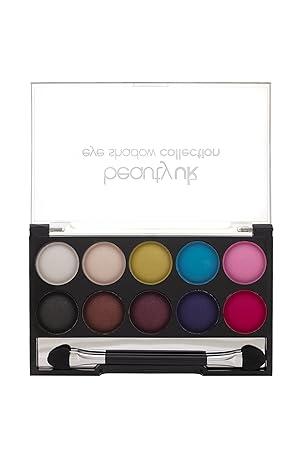
As we didn't have a real budget to buy beauty products we could use to make the mark, we used our own make-up as it was most efficient. The majority of this make-up was also used as part of the antagonist's costume: 
Image result for mac sin lipstickImage result for hoola bronzerImage result for beauty uk eyeshadow palette


Image result for laura geller peach lip oilImage result for nars eyeliner pencilImage result for vaseline lip balm


Using the gloss products, we were able to create a very fresh-looking wound that almost resembles a bruise. 


The protagonist didn't wear any make-up as part of her costume because we wanted her to look natural, young and innocent. 

However, we preferred the antagonist to contrastingly have an over-exaggerated, malevolent (yet still clearly female gender) appearance. My group was inspired to do this look by a character from the film 'Beautiful Creatures' which portrays a very powerful and vindictive woman who is still also quite feminine and arguably misunderstood.

Related image


This is the make-up that we have designed for our antagonist. The cast member that is playing the antagonist has brown eyes. We will be going to the Costume shop to buy contact lenses to make her eyes spooky and scary. It will give our antagonist a mystical look. We will be using dark eye shadow around the eyes to make our antagonist look sick and unwell. We have chosen to do this, as it will; enhance the colour of her eyes. Also, the colour black connotes evilness so, the blackness around the eyes will tell the audience that this character is evil and there is something dark about her. On our Antagonist lips we chose a dark red. This is because red shows the femininity of the character and that even though their is something dark about this character she is also beautiful.


Other equipment/props used to create this look are:


Image result for naked palette

Antagonist costume

Based on our research, we decided to have the antagonist wear a hooded cape with a ribbon. This way, much other elements of the actors clothing are hidden including the majority of their, creating a sense of mystery and the elusive unknown. We also wanted a cape that was long but not to the extent of getting caught in the shrubs. The colour we are looking for is either black or red. 

Image result for black cape

These are visual examples of our ideas on the type of cape we desire. We like the black cape because of the length and shade, symbolising darkness and death (a common colour used for the antagonist of many thriller/horror movies). We also like the red cape as it is more feminine and would give our production the fantastical feel that we would like to include (i.e. Little Red Riding Hood). In addition, this colour is bright and very noticeable. The audience can use this colour to identify the main character (shadow) with bloodshed and violence.

Even though the colour red is more uncommon and unique for an antagonist costume, the black cape would match the actors dark make-up and fit into the stereotype of the brooding and ungodly entity. This style was also cheaper and more available too. 


This is a design that our group designed for our main antagonist. Based on our design on the research that we did on google images. We decided to have a hooded cape with a ribbon. We also wanted a cape that was floor length and was the colour black. Even though we enjoyed the colour red it was more the colour black was more available and cheaper. 


        This is the cape that we bought based on our research and costume design, for the antagonist.

Protagonist Costume

These are a few examples of night dresses that my group and I would like to base the protagonists costume on. We want to use this style of dress due to the multiple layers and frills which gives it an old-fashioned/Victorian feel. The shade of pink was also important because it is soft and stereo-typically feminine - just as we want our character to be. The pink ribbon would also add to the audience perceiving the protagonist as a child/childish and generally innocent. 


We wanted our protagonist to look out of place in the first part of our production, which is why this costume was chosen. It is very simple compared to the busy and green scenery we are going to include. Therefore, she will hopefully standout against the background and seem vulnerable due to only wearing this single piece of clothing and parts of bare skin being shown.

  The character itself will be played by a caucasian female (hopefully blonde). If the protagonist is wearing this along with having fair skin and hair, it will fit the stereotype that she is vulnerable and powerless. We liked the white night dress because of the collar, buttons and the sleeves. The overall design was very Victorian but the elements of the collar, buttons and sleeves did seem very busy and uncomfortable - an unlikely choice in clothing for a young teenager living in the modern world. 

However, both styles of sleepwear has been seen many times in blockbuster films. They also add a certain element of magic and mysticallity, taking the audience into a different time. This is why my group was still considering to include aspects such as the buttons, collar and sleeves.

In consideration, we didn't want to include the features of the white night dress even though we really liked it. This is because we decided to choose a costume, not because it has been used in in many films of other big movies, but should think differently and choose a costume that best fits our task. 

 So, in the design process, we included the pink bow from the pink night dress that we found    in our research, and also decided to go sleeveless as it is a more natural and comfortable     'bed-like' look. We were still able to feature the white lace around the collar to still give it that Victorian look. This costume was based on our initial design and our group has come to     the decision that this costume is the best suited in the representation of our protagonist.

Saturday, 25 March 2017

Discussing Costume And Character Ideas

via ytCropper

Naming Our Main Task

For choosing the name for our main task, everybody in our group picked two to three names each that they liked and thought would suit our main task. As everybody liked the name that they have chosen, it was difficult  to choose a name for our main task. To resolve this difficulty we decided to let the people in our class vote for the name that they liked the best.


Here is the Results for the vote


Thursday, 2 March 2017

Sound Research


Sound can represent social groups in various ways: 
  • Language and accent of a character 
  • Use of music can tell you about a character 
  • Ambient sound can suggest the setting 

KEY: 
  • DIEGETIC – all sound which characters can hear and originates from the films diegesis. 
  • NON-DIEGETIC – all sound added in that characters can’t hear and doesn’t belong to the films diegesis. 
  • DIEGESIS – constructed/fictional film or TV word which we see in films and tv. 
  • SYNCHRONOUS SOUND – sound where the origin can be seen on screen. 
  • ASYNCHRONOUS SOUND – sound where the origin can’t be seen. 
  • PLEONASTIC SOUND – exaggerated sounds which match an image. 
  • VOICEOVER – when dialogue spoken by a narrator or character is heard by the audience while they see an image but the character isn’t speaking. 
  • AMBIENT SOUND – background sounds of everything going on around a character while they’re speaking. 
  • DIALOGUE – speech spoken by characters (language, tone, accent, volume, pitch). 
  • SOUND BRIDGE – sound which continues across one or more cuts/scenes. 
  • SOUND MOTIFS – sounds which are associated with a certain character or setting/location. 
  • FOLEY – artificial sound created in a studio to replicate real sounds e.g. footsteps, punches. 
  • PARALLEL SOUND – sound that matches an image. 
  • CONTRAPUNTAL SOUND – sound that goes against an image. 
  • SOUND MIX – the way different sounds in a scene are mixed together. 
  • DIRECT ADDRESS – when the actor speaks directly to the camera. 

Wednesday, 1 March 2017

Lighting Research

Lighting is very important as it defines the moment that the characters are in. For example, In a Romantic Genre you are more likely going to see Natural and soft lighting as it goes with the romantic atmosphere.

In a horror movie you are most likely going to see low key lighting as it creates a tone for the movie and adds an element of terror. It makes the audience aware when the action is about to take place as it usually gets darker.
The three types of lighting that we are going to focus on are:


  • High Key Lighting                                            
  • Low Key Lighting
  • Soft Lighting
  • Natural lightening
Low Key Lighting: Low Key lighning used for a overall darker picture
Natural Lighting: Light supplied by the sun, as opposed to artificial light from light bulbs

High Key Lighting: High Key Lighting means an overall brighter picture


Soft Lighting :A lighting approach that avoids sharp shadows and harsh bright areas creating a gradual blending from highlights to shadows.


As our main task is going to be a thriller genre the most appropriate lightning that we will use is low key and natural lightening. When our protagonist is in the the bedroom we will use low key lighting as it connotes mystery and danger, it makes the audience aware that something that bad is going to happen. As our main task ends in e enigma code the low key lighting enhances the enigma to create a tense atmosphere.

When our protagonist and Antagonist are in the dream at the beginning of our opening we will be using natural lightning. As this part of the opening will be outside we couldn't really change the lightning however, we specifically chose a day with bad weather as it goes with the thriller genre.

Narrative For Our Main Task


Final Production Idea -

We have decided to follow the nightmare idea. Our basic plot outline is ...
· Protagonist has a nightmare
· She meets the shadow
· Nightmare ends
· Tittle scene
· Go back 3 weeks
· Protagonist is a Teenager at collage
· Her and her Group of friends go to haunted house for a joke
· Antagonist sees them and follows them home
· Antagonist follows them in their dreams
· Appears in real life and causes death to her friends
· She has the power to enter the dreams of her friends and save them
· She Finds out who shadow is
· Antagonist is defeated
However for our opening scene our basic outline is ...


· Protagonist is dreaming
· She walks around a field
· She sees a shadow
· Begins to back away in fear
· Antagonist touches her and hurts her
· She wakes up and sees mark on arm where shadow grabbed her
· She sees Antagonist in doorway
· She turns her light on
· The Antagonist has disappeared
· Calmly turns light back off
· Antagonist reappears next to bedside